

 Vn
Vn 中文
中文 HOME
HOME


News
Vietnamese fresh coconuts local specialty to a multi-billion dollar industry.
In 2024, the export value of Vietnamese fresh coconuts reached 390 million USD, accounting for 31% of the total export value of the coconut industry and rising to the 3rd position in the list of key export fruits, only after durian and dragon fruit.
Establishing a new position
After more than a decade of effort from localities, businesses, and the Vietnam Coconut Association, this fruit, deeply rooted in Southern Vietnamese culture, has established a new position, opening up prospects for joining the group of billion-dollar agricultural products. However, to maintain growth momentum and compete with “giants” like Thailand, the Philippines, and Indonesia, the Vietnamese coconut industry needs to overcome many bottlenecks related to growing areas, varieties, branding, and logistics.
Vietnamese fresh coconuts have made a strong impression thanks to the collaboration of many parties, from farmers and businesses to management agencies. According to the Department of Crop Production and Plant Protection, Ministry of Agriculture and Environment (MARD), coconut export revenue in 2024 reached nearly US$1.1 billion, surpassing the US$1 billion mark for the first time in 14 years, with fresh coconuts making a significant contribution. The two largest markets in the world, the United States and China, have officially opened their doors to import through official channels, creating a major impetus for the industry. Currently, Vietnamese coconuts are present in more than 40 countries, with export volume reaching 30,000 tons in 2023 and expected to increase sharply in the coming years.
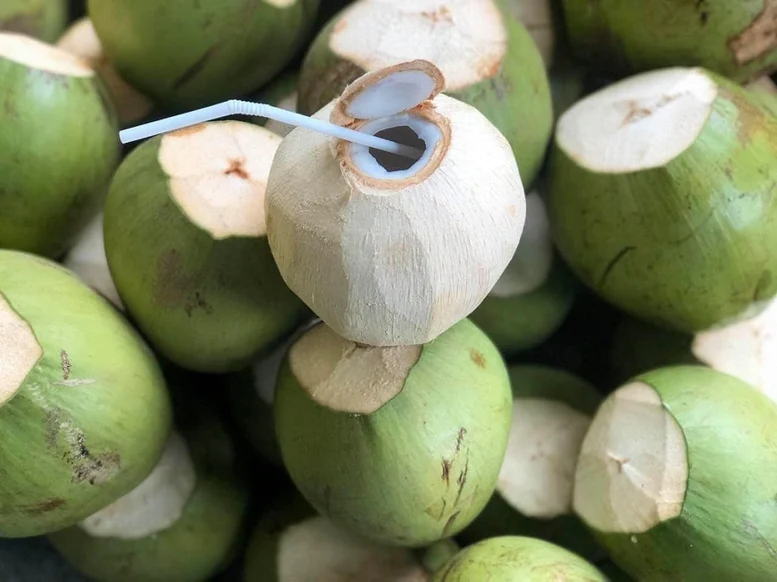
This transformation is driven by the development of more than 250 processing facilities, of which 80 businesses focus on deep processing, along with the emergence of large-scale coconut farms.
With an area of approximately 200,000 hectares, Vietnam ranks 7th in the world in coconut cultivation area, supplying 2 million tons per year. Siamese coconuts, with their distinctive sweet flavor, have been granted geographical indication status in Ben Tre, where over 8,300 hectares meet export standards, making it the “coconut capital” of the country. Diverse coconut products, such as coconut fiber, coconut leaves, and agricultural substrates, also open up great potential in the processing and handicraft industries.
In 2024, coconut exports increased by more than 20% compared to 2023, with fresh coconuts contributing $390 million and processed products reaching nearly $700 million. In the first two months of 2025, fresh coconut exports reached $33.3 million (an 18% increase) and processed products reached $43.8 million (an 86% increase), indicating a strong shift towards deep processing. China, consuming 4 billion coconuts annually, and the United States, with demand increasing by 46% in February 2025, are the two main drivers. The approval of official export protocols has helped Vietnamese coconuts compete effectively with Thailand and the Philippines, which currently lead the global market.
Ms. Tran Le Hoa, Deputy Head of the Social Sciences Department (Vietnam Coconut Association), commented: “Interest from major markets is a golden opportunity, but it also places great pressure on the quality and scale of production.” The Association has been experimenting with a communication channel on Zalo since 2023 to connect businesses with foreign partners, support procurement and product promotion, especially for small and medium-sized enterprises.
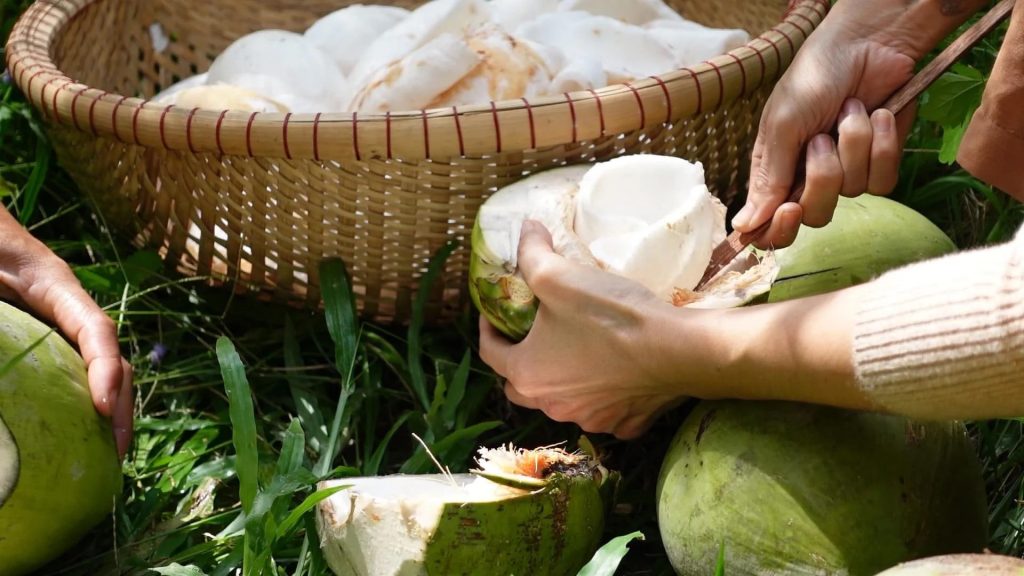
Despite its potential, Vietnam’s coconut industry still faces many challenges. Production is still small-scale and fragmented, with coconuts grown in 16 provinces and cities mainly through intercropping, resulting in inconsistent quality and size. Logistics is a major bottleneck, with transportation primarily by motorbike and rudimentary boats, increasing costs and reducing preservation capabilities. Makeshift storage facilities owned by households also limit storage time, while Thailand’s automated packaging technology provides a significant competitive advantage.
Vietnamese coconut brands remain relatively obscure compared to regional competitors. Despite comparable quality, manual processing methods and a lack of clear brand recognition put them at a price disadvantage on international shelves. Furthermore, the shortage of raw materials due to the massive export of Vietnamese fresh coconuts to China and competition from Indonesia – which will impose an 80% export tax on dried coconuts from January 1, 2025 – threaten the domestic processing industry. Many businesses have to import coconuts from Indonesia to fulfill orders, while domestic factories are operating at only 10-15% capacity.

Ms. Tran Le Hoa believes that a legal framework needs to be established for concentrated coconut farming models, facilitating access to credit and participation in official export chains. Standardizing coconut varieties is a crucial step, requiring coordination between localities, cooperatives, and businesses to identify superior varieties, guide breeding, and control fertilization to ensure sustainability. Building regional brands associated with geographical indications, such as “Tam Quan Coconut” (Binh Dinh) or “Ninh Da Coconut” (Khanh Hoa), along with planting area codes, will increase attractiveness in the international market.
Logistics needs improvement with investment in cold chain and sea transport, like the model of Mega A Logistics, which helps reduce costs by 3,000 VND/coconut and shorten customs clearance time. Bringing coconuts to e-commerce platforms, as recommended at the “Connecting Coconut Production and Consumption” Forum on December 13, 2024, is a strategic solution. Digital platforms not only sell products but also tell the story of the land, culture, and sustainability, building trust with global consumers.
Strategically, including coconut in the national action program for key industrial crops is a crucial prerequisite. This helps to plan planting areas synchronously, prioritizing investment in infrastructure, processing, and science and technology. Businesses like Vina T&T and Betrimex are pioneering new technologies, from diamond-cut coconuts to canned coconut water, opening up prospects for product diversification.
With its short fruiting cycle and high profitability, coconut is not only a beverage but also a cultural and sustainable symbol of Vietnam.

In the context of global consumers’ growing interest in green values, leveraging the intangible values of coconuts – such as regional stories and production journeys – will help Vietnam expand its market and spread its national identity.
