

 Vn
Vn 中文
中文 HOME
HOME


News
Vietnam’s Coconut Industry Rises to Top 3 in the World, but…
Vietnam’s coconut industry has risen to the top 3 in the world, but it is still struggling with the challenge of increasing added value.
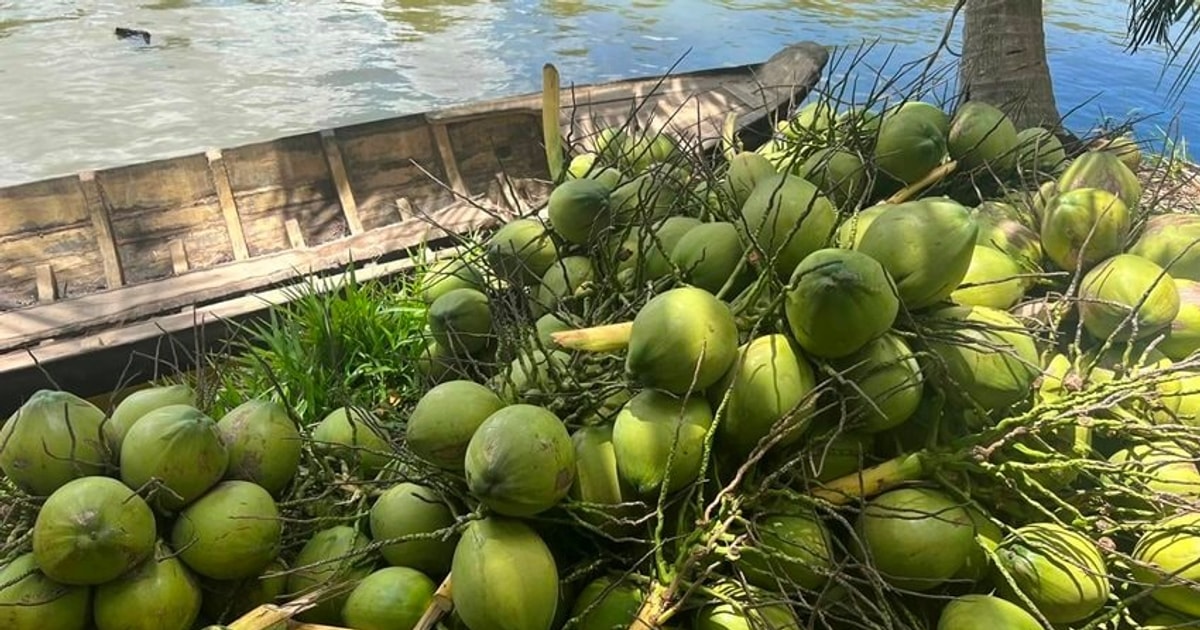
Entering 2026, Vietnam’s coconut industry faces new opportunities after a booming 2025 in export turnover. However, behind the billion-dollar figures lie concerns about how to escape the shadow of being a “raw material supplier” and establish a brand position on the global agricultural map.
The Paradox Between Record Exports and Actual Value
According to data from the Customs Department, Vietnam’s coconut exports are expected to reach approximately US$1.15 billion in 2025. This achievement places the country third in the world, behind only the two “giants” of the Philippines and Indonesia. With over 200,000 hectares stretching from the Mekong Delta to Central Vietnam, coconut cultivation has become the primary livelihood for tens of thousands of farming households.
Despite the large export volume, the profit margin is not commensurate. Currently, Vietnamese coconuts are mainly exported as raw materials or simply processed products. Many foreign businesses import our coconuts for further processing, labeling them with their own brands and selling them internationally at prices many times higher. This means that Vietnamese coconuts, despite their good quality, lack brand competitiveness compared to products from Thailand or the Philippines in demanding markets such as the US, EU, and Japan.
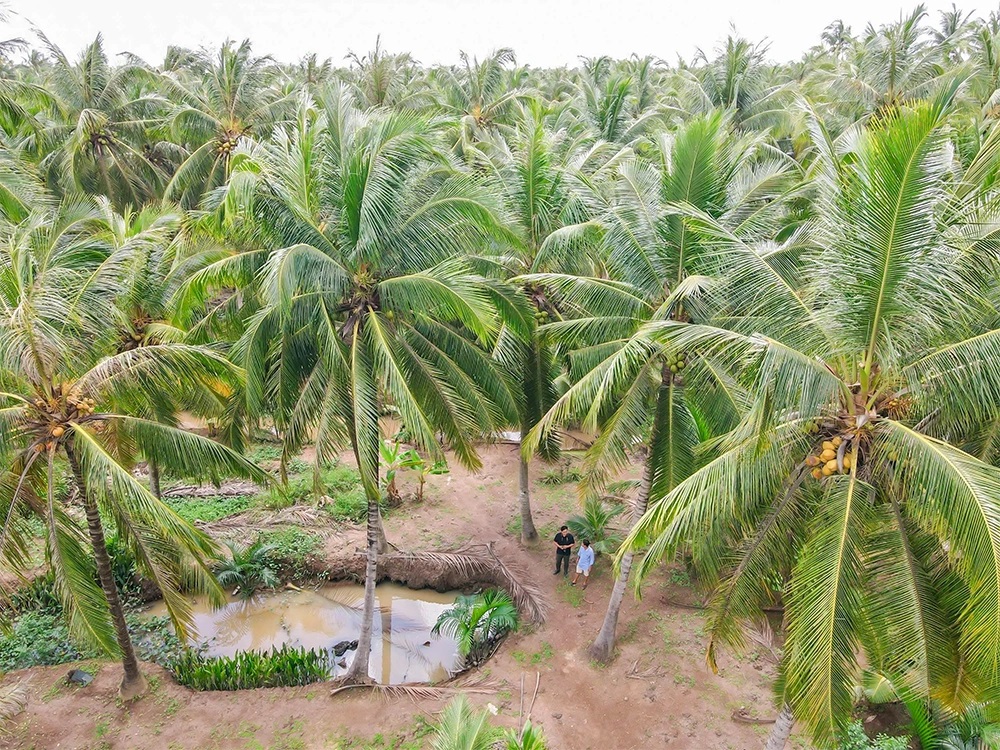
The bottleneck in deep processing and brand building
The current situation shows that only about 30% of coconut products are deeply processed using technologies such as UHT sterilization or aseptic packaging. The main products still revolve around coconut water, coconut milk, coconut oil, and by-products such as activated charcoal or coconut fiber. The biggest obstacle for domestic businesses is the cost of investing in modern equipment and machinery, which largely has to be imported, making expansion difficult.
Furthermore, the lesson learned from Japan’s Wagyu beef industry regarding brand protection serves as a valuable warning to the coconut industry. Without a well-structured brand strategy and international protection registration, we risk losing control even over specialty coconut varieties like the Siamese coconut. Currently, most coconut businesses only invest at a basic level in logos and packaging, lacking consistent “brand stories” to build lasting trust with foreign partners.
Completing the Value Chain and Aiming for International Organic Coconut Standards
To elevate its position, the coconut industry is undergoing a revolution in production organization. The country currently has approximately 145 processing plants and 600 businesses striving to establish close links with farmers. The shift from inorganic to organic and biological fertilizers is helping to stabilize fruit quality and protect the environment for sustainable farming.
In particular, the “five-party” linkage model between businesses, cooperatives, farmers, banks, and scientists is being effectively piloted in provinces such as Dong Thap and Vinh Long. To date, more than 68 hectares of coconut plantations have met international organic standards, creating a foundation for deeper penetration into high-end supply chains. In addition, the proposal to establish a regional raw coconut price information exchange in Asia by the end of 2025 also promises to bring transparency and protect the rights of coconut growers against the unpredictable fluctuations of the market.
Based on the latest statistics, the coconut industry possesses a solid foundation to achieve its goal of becoming a leader. By 2025, total export turnover is expected to reach approximately US$1.15 billion with a total production of over 2.26 million tons of coconuts from an area of 200,000 hectares across 18 provinces and cities. The production system, comprising 600 businesses and 145 processing plants, is gradually transitioning to stringent organic standards. These figures demonstrate abundant supply capacity, but also place pressure on technology to modernize in order to avoid wasting this valuable resource.
