

 Vn
Vn 中文
中文 HOME
HOME


News
To successfully export Vietnamese fresh coconut product to China
Currently, Viet Nam has more than 180,000 hectares of agricultural land used to grow coconuts, most of which are concentrated in the Mekong Delta provinces, especially the four provinces of Ben Tre, Tra Vinh, Tien Giang and Vinh Long with a total area of exceed 130,000 hectares

Vietnam ranks 7th in fresh coconut production in the world. Although facing many challenges and fierce competition, it is still a coconut consumption market with a lot of potential. Vietnamese coconuts are highly regarded for their quality, especially the green Siamese coconut, pineapple coconut, and dwarf Siamese coconut.
China’s large market of 1.5 billion people today has been divided into many different segments. Therefore, there is no other market with such strong consumption and payment of high-end food as this place.
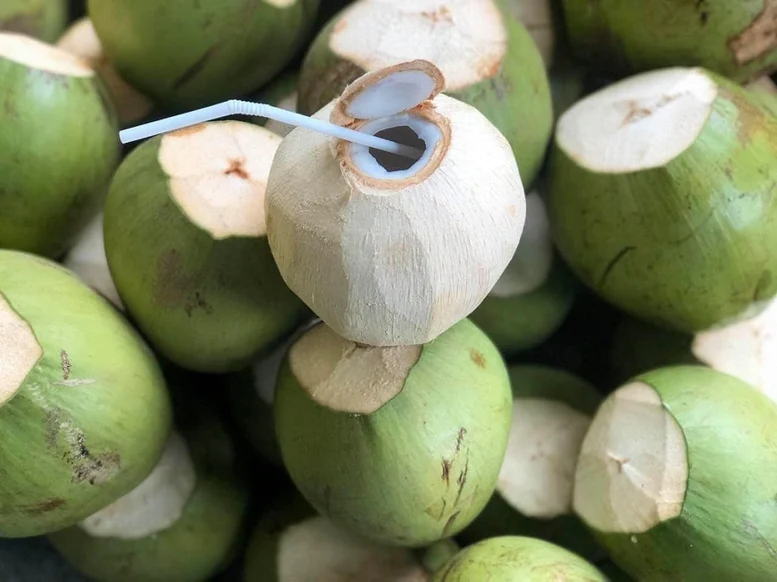
Fresh coconut is the latest addition to the list of Vietnamese agricultural products approved for export to China.The large demand of the Chinese market not only exposes a “golden” opportunity to the Vietnamese coconut industry, but also poses potential risks for businesses if there is no systematic investment in raw material areas as well as strict control over the cultivation, harvesting, and processing processes…

In response to a huge opportunity in the billion-people Chinese market, domestic fresh coconut exporting enterprises have prepared necessary conditions for Vietnamese coconuts to dominate this market.
Successfully exporting fresh coconuts to China requires adhering to strict phytosanitary protocols, including registration of growing areas and packing facilities with China’s GACC, compliance with food safety standards, and proper documentation. Key steps involve maintaining strict quality control (2% sampling rate initially), using refrigerated logistics, and ensuring proper labeling

However, some businesses expressed concerns about the risks in meeting the huge demand of this market. Because the world market only defines coconut as a fruit for drinking water. In fact, in Vietnam’s coconut raw material area, there are two types: coconut for drinking water and industrial coconut for producing products such as coconut milk, coconut oil… These two types of coconut also have different characteristics. The former harvest time is every 21-22 days, if left longer; the coconut tree will “hang” (unable to produce fruit). While later has a harvest time of up to several months, if harvested early, the industrial coconut tree will also have the phenomenon of “hanging”.

A large fresh coconut exporter in Ben Tre said that the demand for drinking coconuts in the Chinese market is only concentrated in the period from April to July every year. At this time, the demand for fresh coconuts will be very high, while the remaining months have almost no demand. This means that during the peak period, the fresh coconut market may be “out of stock”, even at risk of exploiting industrial coconuts to supply traders, leading to the risk of decreased productivity and lack of raw materials for industrial coconut processing factories. Meanwhile, fresh coconut exporting enterprises also face the risk of high input material prices, affecting the supply to traditional markets such as the US, Europe, Australia, etc. This reality shows that effectively exploiting the potential of the Chinese market is not an easy task for coconut enterprises, requiring enterprises to have careful and cautious calculations.
